Frontal sinus surgery
Frontal Sinus Surgery: Understanding a Complex Problem
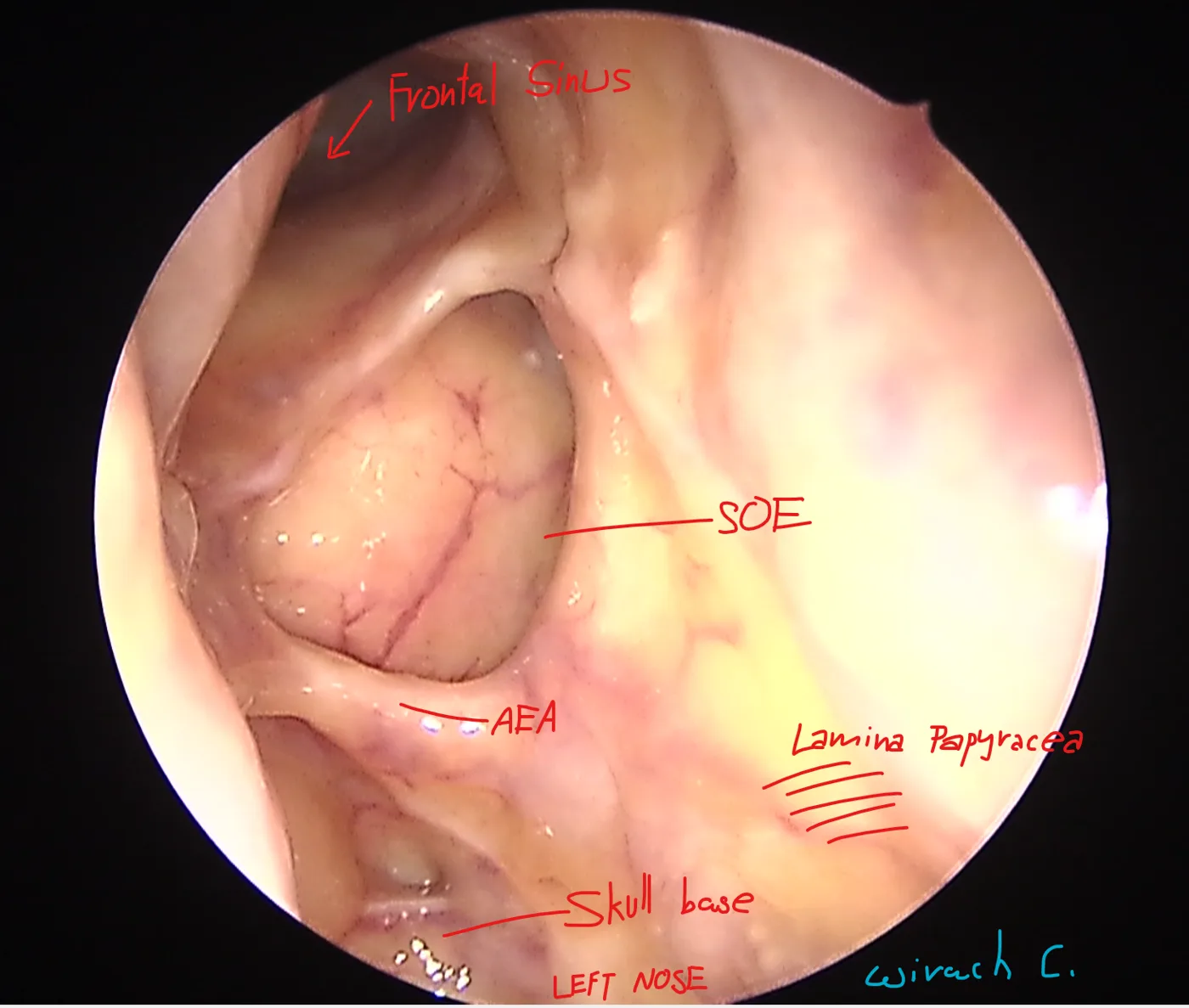
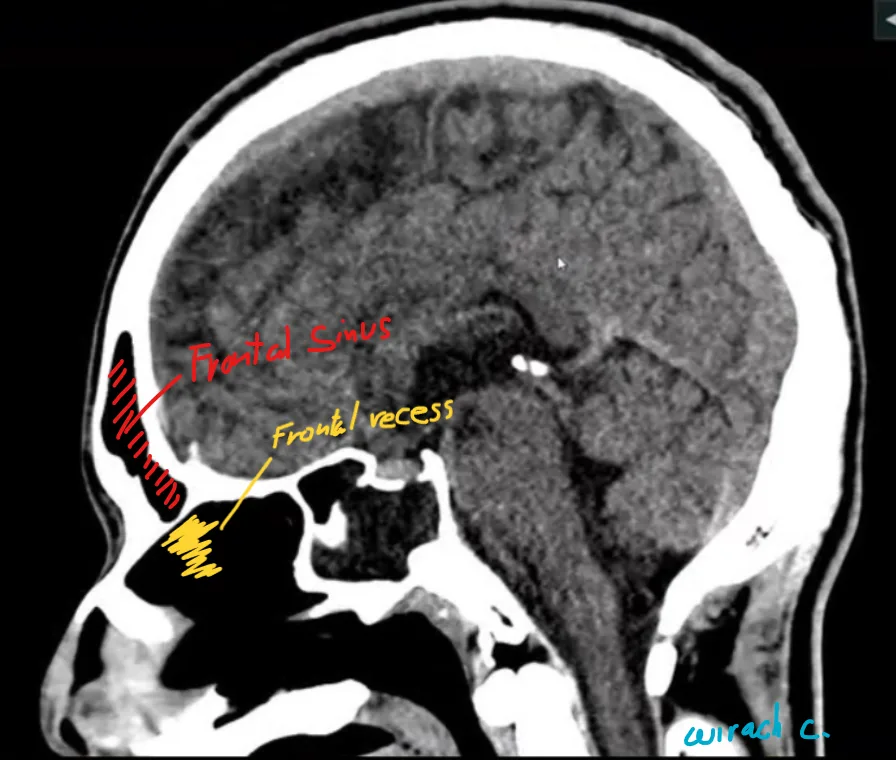
Frontal sinus surgery is considered one of the most technically demanding areas in endoscopic sinus surgery (ESS). The frontal sinus is located in a narrow and complex region of the nose, close to important structures such as the eyes and the brain. Because of this, even small anatomical differences can significantly affect both surgical difficulty and long-term results. For patients with chronic rhinosinusitis with nasal polyps (CRSwNP), especially those who have undergone previous surgery, disease in the frontal sinus is a common reason for persistent symptoms or recurrence.
Why Frontal Sinus Problems Can Be Difficult
The frontal sinus drains through a small channel called the frontal recess. This pathway may be:
- naturally narrow
- blocked by inflammation or polyps
- scarred after previous surgery
When this drainage pathway is not adequately opened, symptoms may persist or return over time.
Why Some Sinus Surgeries Do Not Fully Resolve Symptoms
In some cases, patients may continue to have symptoms after sinus surgery. This can occur due to:
- incomplete access to the frontal sinus
- narrowing or scarring after surgery
- complex or unfavorable anatomy
- ongoing inflammation related to the underlying disease
Understanding the cause of persistent disease is important in planning further treatment.
Revision Surgery: A More Complex Situation
Revision sinus surgery requires careful planning. Compared with initial surgery, it often involves:
- altered anatomical landmarks
- scar tissue
- disease located in more difficult-to-access areas
Each case needs to be evaluated individually to determine the most appropriate surgical approach.
Choosing the Appropriate Surgical Approach
Now, the modern frontal sinus surgery is no longer based on a single technique. Instead, selecting an appropriate approach depends on each patient’s anatomy and disease characteristics.
This may include:
- The conventional endoscopic approaches (Draf I/ IIa/ IIb/ III)
- The advanced techniques such as the
- Carolyn’s Window Approach (CWA), invented by Prof.Richard J Harvey in Australia. https://youtu.be/zLgg_VsinGk?si=EhAjQW_FvMZmLM5F
- The Orbital transposition technique - invented by Prof. Paolo Castlenouvo in Italy https://www.youtube.com/watch?v=Oq0K8l9CCWI
- tailored combinations depending on disease severity and anatomical constraints
In my clinical practice, an anatomy-based strategy—considering factors such as the configuration of the frontal recess, prior surgery, and disease extent—can help guide surgical planning and improve access to the frontal sinus.
Clinical Experience and Ongoing Research
To better understand these anatomical challenges, a recent study from our group was conducted and published in European Archives of Oto-Rhino-Laryngology:
Carolyn’s Window Approach for Frontal Sinus Surgery in Asian Noses https://link.springer.com/article/10.1007/s00405-026-10096-0
The study demonstrated that, in selected patients:
- a direct surgical pathway to the frontal sinus can be achieved
- adequate visualization is possible with a 0° endoscope
- satisfactory short-term sinus patency can be maintained
These findings support the importance of selecting a surgical approach based on individual anatomy.
Understanding Treatment Beyond Surgery
Frontal sinus disease is often part of a broader inflammatory condition. Management may include:
- medical therapy
- control of inflammation
- consideration of additional treatments when appropriate
Surgery is one component of care, and long-term results depend on both surgical technique and disease control.
Surgical Education
For those interested in understanding surgical techniques and concepts, educational videos are available:
▶️https://www.youtube.com/@rvtrhinoclip
These videos are intended to provide general educational information about sinus surgery.
Final Thought
Frontal sinus surgery requires careful planning and an understanding of both anatomy and disease behavior. An individualized approach helps improve access to the sinus and supports better long-term outcomes. If symptoms persist after prior treatment, further evaluation may help determine the most appropriate next step.
Wirach Chitsuthipakorn, MD