How I Treat Central Compartment Atopic Disease (CCAD)
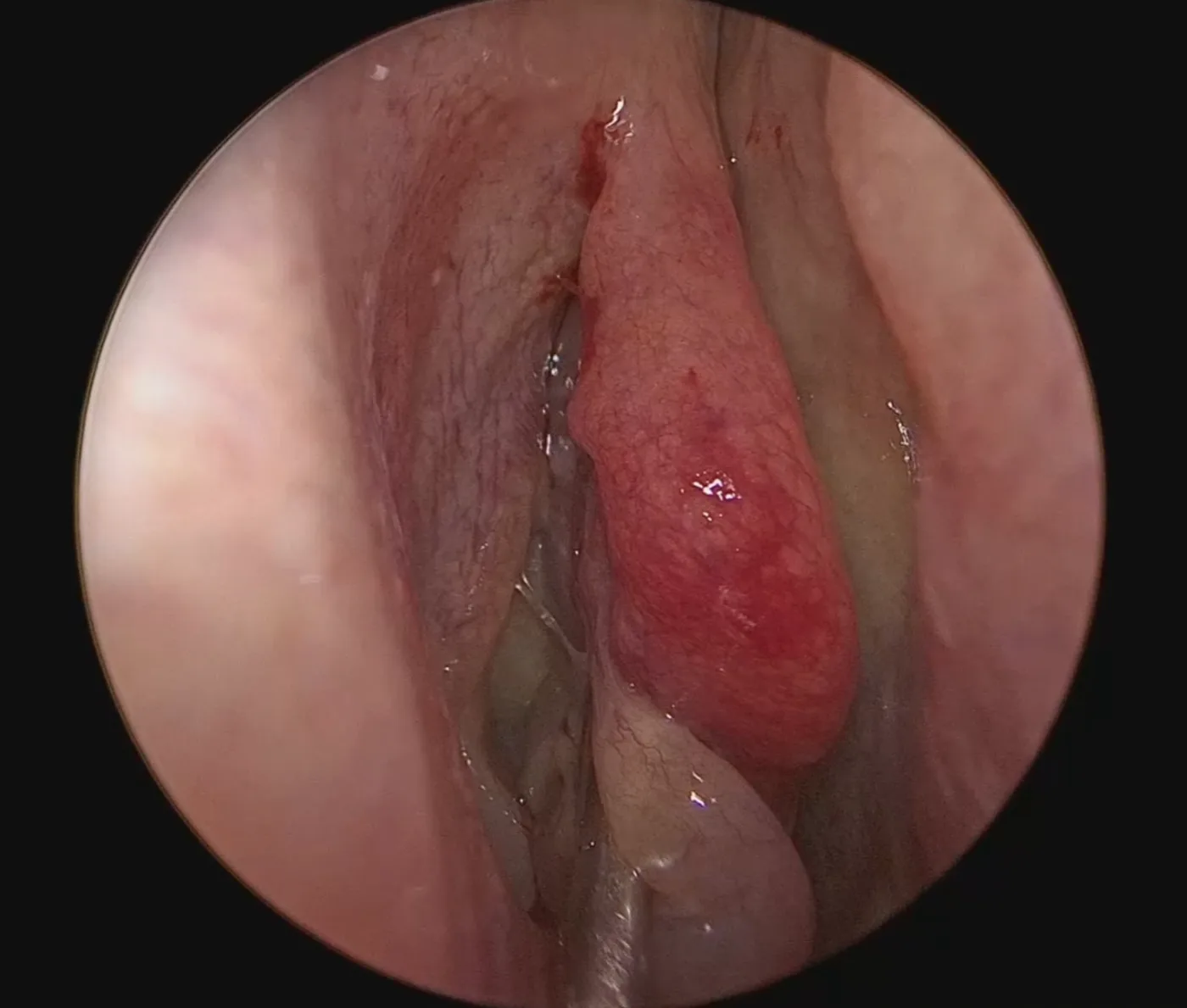
CCAD finding in endoscope
Central compartment atopic disease, or CCAD, is a distinct pattern of chronic inflammatory disease in which swelling and polyp-like changes develop mainly around the central structures of the nose, particularly the middle turbinates, superior turbinates, and upper nasal septum. It is strongly associated with allergy to airborne allergens. For this reason, I do not treat CCAD as simply “sinusitis that needs surgery.” I treat both the obstructed nose and the allergic inflammation driving the disease. This distinction matters because treatment directed only at blocked sinuses may leave the underlying allergic process insufficiently controlled.
My first step is to confirm that the diagnosis is correct. Nasal blockage, reduced smell, sneezing, itching, and nasal discharge can overlap with allergic rhinitis and other forms of chronic rhinosinusitis. I therefore combine the history with nasal endoscopy and a carefully reviewed sinus CT scan. I also assess previous treatment, asthma, medication reactions, prior surgery, and exposure to allergens. Allergy testing is "a must" when the result could change avoidance measures or support allergen immunotherapy.
For mild or early CCAD, treatment usually begins medically. Saline irrigation helps remove mucus, allergens, and inflammatory material. An intranasal corticosteroid is used consistently, with attention to the correct direction and delivery technique. When allergic rhinitis symptoms are prominent, antihistamines or other allergy-directed treatments may be added. A short course of oral corticosteroid may occasionally be appropriate for severe inflammation, but it is not a long-term solution. Antibiotics are not prescribed routinely unless there is evidence of bacterial infection.
I consider endoscopic sinus surgery when symptoms and objective disease remain uncontrolled despite appropriate medical treatment, or when central swelling obstructs sinus drainage and limits the delivery of topical medication. The operation is individualized rather than identical for every patient. My aim is to reopen the necessary drainage pathways, reduce inflammatory tissue, improve ventilation, and create access for postoperative topical treatment while preserving healthy structures whenever possible. Particular care is required around the olfactory region because smell is often an important concern.
Surgery is not the end of treatment. Postoperative cleaning, saline irrigation, and long-term topical corticosteroid therapy are central to maintaining control. I monitor healing by endoscopy and adjust treatment according to symptoms, recurrent edema, polyp formation, and allergen exposure. In patients with clinically relevant allergy, allergen avoidance and immunotherapy is considered as part of long-term management.
Biologic therapy is generally reserved for patients with severe, recurrent, or more diffuse type 2 inflammatory disease after a complete assessment. A diagnosis of CCAD alone does not automatically mean that a biologic is required.
My overall philosophy is simple: identify the disease pattern, control the allergy, use surgery only when it adds clear value, and continue preventive treatment afterward. Successful CCAD care is not measured only by a clear CT scan. It is measured by comfortable breathing, preserved smell, fewer flare-ups, and durable control with the least treatment burden necessary.
Author
Asst.Prof.Wirach Chitsuthipakorn
Board Otolaryngology, 2009
Certificate in Rhinology and Allergy, 2022
Research profiles:Google Scholar;ResearchGate
First published: 15June 2026